
The best science courses in Nigeria are professional courses with a high prospect for employment after graduation.
I must tell you the truth: many students finish school and end up being unemployed because, for one reason or another, they could not secure admission to any of these courses.
Like you, growing up, I only knew about Medicine and Surgery, Law, and Engineering. The reason is that the Nigerian economy is only structured to favour graduates of certain disciplines for employment opportunities.
It doesn’t mean that other courses are useless, but the opportunities do not match the courses I would list in this article.
Let me know if you have any questions or need further clarification. I would love to hear from you.
Table of contents
Best Science Courses in Nigeria

Here is a table of the best science courses to study in Nigeria and their cut-off marks;
| SN | Course | Cut-Off Mark |
|---|---|---|
| 1 | Medicine & Surgery | 250 |
| 2 | Nursing Science | 240 |
| 3 | Pharmacy | 240 |
| 4 | Radiography | 240 |
| 5 | Mechanical Engineering | 200 |
| 6 | Architecture | 180 |
| 7 | Medical Laboratory Science | 240 |
| 8 | Dentistry | 250 |
| 9 | Medical Rehabilitation | 230 |
| 10 | Computer Science | 200 |
| 11 | Petroleum Engineering | 180 |
| 12 | Veterinary Medicine | 200 |
| 13 | Electrical Engineering | 180 |
Note that the cut-off mark here varies according to the university you’re applying to for admission. Let me know the school and course you’re applying to for their cut-off mark.
Medicine & Surgery

Studying Medicine and Surgery in Nigeria is a popular choice for many students due to the prestige associated with the profession and a high employment rate.
There are 48 medical schools in Nigeria accredited by the Medical and Dental Council of Nigeria (MDCAN).
The degree you earn after completing medical school is a Bachelor of Medicine, Bachelor of Surgery (MBBS). The program typically lasts six years and is divided into pre-clinical and clinical.
- Pre-clinical studies (usually the first two or three years) focus on foundational science subjects such as anatomy, physiology, biochemistry, pharmacology, and pathology.
- Clinical studies (the remaining years) involve applying your knowledge to real-world scenarios by working with patients in hospitals and other clinical settings. You’ll rotate through various specialities, gaining experience in internal medicine, surgery, paediatrics, obstetrics and gynaecology, and psychiatry.
Admission Requirement
Requirements to study medicine and surgery in Nigeria
To be admitted into an MBBS program in Nigeria, you’ll typically need to meet the following requirements:
- Successfully completed the Unified Tertiary Matriculation Examination (UTME) conducted by the Joint Admissions and Matriculation Board (JAMB). This is a standardized test that all Nigerian university students must take.
- Have excellent grades in your Senior Secondary School Certificate Examination (SSCE), particularly in science subjects like biology, chemistry, and physics. Some universities may also require good grades in mathematics and English.
- Meet the specific admission requirements of the university you’re applying to. These may vary slightly between institutions. Some universities may require an additional entrance exam or interview.
Nursing Science

Nursing Science is a well-respected degree option in Nigeria, offering a rewarding career path to helping others.
Though the profession is populated by female nurses, you can take the course as a male. I recommend this course because it is easy to get employment abroad.
Here’s a breakdown of studying Nursing Science in Nigeria:
Program Structure
- The degree awarded is typically a Bachelor of Nursing Science (BNSc).
- Programs last four to five years, depending on the entry route (direct entry or through the Unified Tertiary Matriculation Examination – UTME).
- The curriculum combines classroom learning with practical experience in hospitals and community settings.
Admission Requirements
- Generally, five credit passes in your Senior Secondary School Certificate Examination (SSCE) are required, including English Language, Mathematics, Biology, Chemistry, and Physics.
You can also study Nursing Science at any accredited School of Nursing in Nigeria.
Pharmacy

Pharmacy is the field of health sciences that deals with the discovery, development, production, control, distribution, and utilization of drugs and medicines.
There are two types of Pharmacy degrees offered in Nigerian universities;
- Doctor of Pharmacy (D.Pharm) – Six (6) years duration
- Bachelor of Pharmacy (B.Pharm) – Five (5) years duration
Admission Requirements
- Five credit passes are required in your Senior Secondary School Certificate Examination (SSCE), including Chemistry, Biology, Physics, Mathematics, and English Language.
- Scoring highly in these subjects is crucial for admission into competitive programs.
Radiography

Radiography is a well-respected healthcare profession in Nigeria that uses ionizing radiation to produce images of the human body for diagnostic purposes.
It is crucial in helping medical professionals diagnose and treat various diseases and injuries.
Radiography Programs in Nigeria
Radiography in Nigeria is offered as a Bachelor of Science (B.Sc.) degree program, typically lasting five or four years if you gain admission through the JAMB Direct Entry (DE).
The curriculum combines classroom learning with practical experience in hospitals and imaging centres.
Here’s a breakdown of the typical program structure:
- First Year: Foundational science courses like physics, biology, chemistry, anatomy, and physiology provide a solid base for understanding the scientific principles underlying radiography.
- Second and Third Years: In-depth coursework in radiographic techniques, positioning, radiation safety, pathology, and medical ethics prepares students for clinical practice.
- Fourth and Fifth Years: Clinical rotations in various radiology departments, such as X-ray, fluoroscopy, mammography, and computed tomography (CT), allow students to gain hands-on experience under the supervision of qualified radiographers.
Admission Requirements
The specific admission requirements for radiography programs in Nigeria may vary slightly between universities but generally include:
- Completion of the Senior Secondary School Certificate Examination (SSCE) with at least five credit passes, including English Language, Mathematics, Physics, Chemistry, and Biology.
- Meeting the minimum cut-off point for UTME (Unified Tertiary Matriculation Examination) conducted by JAMB (Joint Admissions and Matriculation Board).
- Some universities may have additional requirements, such as a Post UTME aptitude test or interview.
Regulatory Body
The Radiographers Registration Board of Nigeria (RRBN) is the regulatory body for radiography education and practice in Nigeria.
They ensure that radiographers meet the qualifications and standards for safe and competent practice.
Career Opportunities
Graduates of radiography programs in Nigeria can find employment opportunities in various settings, including:
- Hospitals
- Clinics
- Imaging centers
- Research institutions
- Pharmaceutical companies
- Educational institutions
Mechanical Engineering

Mechanical engineering is a popular engineering discipline in Nigeria that applies engineering principles to designing, developing, operating, and maintaining mechanical systems.
Admission Requirements
- Five credit passes are required for your Senior Secondary School Certificate Examination (SSCE), which includes Mathematics, Physics, Chemistry, and English Language.
- Some universities may require good grades in Further Mathematics and Technical Drawing.
- Scoring highly in these subjects is crucial for admission into competitive programs.
Career Opportunities
Graduates of mechanical engineering programs in Nigeria can find employment opportunities in various sectors, including:
- Oil and gas industry
- Power generation and distribution
- Automotive industry
- Manufacturing sector
- Construction industry
- Consulting firms
- Educational institutions
Architecture

Architecture is a well-regarded course of study in Nigeria, combining creativity, technical skills, and a desire to shape the built environment.
The degree awarded after completing the program is typically a Bachelor of Architecture (B.Arch.), which lasts for four or five years, depending on your mode of admission (UTME or DE).
Admission Requirements
- Generally, five credit passes are required for your Senior Secondary School Certificate Examination (SSCE), which includes Mathematics, Physics, Chemistry, and English Language.
- Some universities may require good grades in Further Mathematics and Fine Arts/Technical Drawing.
- Scoring highly in these subjects is crucial for admission into competitive programs.
Career Opportunities
Graduates of architecture programs in Nigeria can find employment opportunities in various settings, including:
- Architectural firms
- Construction companies
- Government agencies
- Town planning authorities
- Real estate development companies
- Educational institutions
Medical Laboratory Science
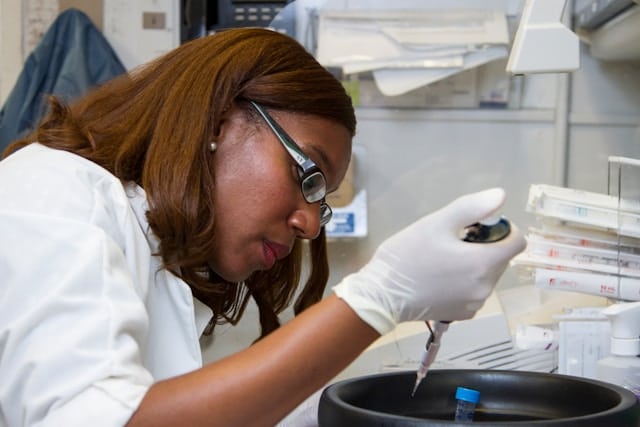
Medical Laboratory Science (MLS) is a rewarding career path in Nigeria’s healthcare sector. MLS professionals play a vital role in diagnosing and treating diseases by analyzing body fluids, tissues, and cells.
Here’s a comprehensive breakdown of what to expect:
Program Structure
- Degree Awarded: Bachelor of Medical Laboratory Science (B.MLS)
- Program Duration: Typically four to five years (depending on the entry route)
- Structure: The program blends classroom learning with hands-on laboratory experience in simulated and actual clinical settings.
Admission Requirement
- SSCE Requirement: Five credit passes, typically in English Language, Mathematics, Biology/Health Sciences, Chemistry, and Physics.
- UTME Performance: Scoring well in the Unified Tertiary Matriculation Examination (UTME) is crucial.
Career Opportunities
- Medical laboratories in hospitals, clinics, and private diagnostic centres
- Research institutions
- Pharmaceutical companies
- Public health agencies
- Educational institutions (teaching MLS courses)
Dentistry

Dentistry is a well-respected profession in Nigeria, offering a rewarding career path helping people achieve and maintain good oral health.
- After completing dental school, the degree awarded is a Bachelor of Dental Surgery (BDS).
- The program is a rigorous and demanding course of study, typically lasting six (6) years.
- The curriculum combines classroom learning with extensive practical experience in dental clinics and simulated settings.
Admission Requirements
Admission Requirements
- Completing the Senior Secondary School Certificate Examination (SSCE) with excellent grades in science subjects is crucial.
- Five credit passes are required, including English Language, Mathematics, Biology, Chemistry, and Physics.
- High scores in the Unified Tertiary Matriculation Examination (UTME) and Post UTME are essential for admission into competitive dentistry programs.
Medical Rehabilitation

Medical rehabilitation is a broad healthcare field focused on helping individuals regain functional ability after an illness, injury, or disability.
- After completing the program, the degree awarded is typically a Bachelor of Science (B.Sc.) in Medical Rehabilitation or a Bachelor of Physiotherapy (B.Physio).
- The program duration is five years at the university.
Admission Requirements
The specific admission requirements for Medical Rehabilitation programs in Nigeria include:
- Completion of the Senior Secondary School Certificate Examination (SSCE) with at least five credit passes, including English Language, Mathematics, Biology/Health Sciences, Chemistry, and Physics.
- Scoring highly in these subjects is crucial for admission into competitive programs.
Career Opportunities
Graduates of Medical Rehabilitation programs in Nigeria can find employment opportunities in various settings, including:
- Hospitals
- Rehabilitation centers
- Outpatient clinics
- Special schools
- Nursing homes
- Sports facilities
- Home health care
- Insurance companies
Computer Science

Computer science is a popular and well-respected course of study in Nigeria, offering a gateway to a rewarding career in the tech industry.
- The degree awarded after completing the program is typically a Bachelor of Science (B.Sc.) in Computer Science.
- The program lasts four years, depending on the university and entry route.
Admission Requirements
- Five credit passes are required for your Senior Secondary School Certificate Examination (SSCE), which includes Mathematics, Physics, and English Language.
- Some universities may require Chemistry or Further Mathematics.
- Scoring highly in these subjects is crucial for admission into competitive programs.
Career Opportunities
Graduates of computer science programs in Nigeria can find employment opportunities in various sectors, including:
- Software development companies
- Information technology (IT) consulting firms
- Banks and financial institutions
- Telecommunications companies
- Oil and gas companies
- Government agencies
- Educational institutions
- E-commerce and startup businesses
Petroleum Engineering

Petroleum engineering is a highly sought-after field of study in Nigeria, especially with the country’s rich oil and gas reserves.
After completing the program, the degree awarded is a Bachelor of Engineering (B.Eng.) in Petroleum Engineering, lasting five (5) years.
Admission Requirements
- Five credit passes are required for your Senior Secondary School Certificate Examination (SSCE), which includes Mathematics, Physics, Chemistry, and English Language.
- Some universities may require Further Mathematics.
Career Opportunities
Graduates of petroleum engineering programs in Nigeria can find employment opportunities in various sectors of the oil and gas industry, including:
- Upstream exploration and production companies
- Oilfield services companies
- Midstream transportation and storage companies
- Downstream refining and petrochemical companies
- Government agencies regulating the oil and gas industry
Veterinary Medicine

Veterinary medicine is a fulfilling career path for those passionate about animal health and well-being. If you’re considering this field in Nigeria, here’s a comprehensive breakdown:
Degree and Program Structure
- Degree Awarded: Doctor of Veterinary Medicine (DVM)
- Program Duration: Typically five to six years (full-time)
- Structure: The program integrates theoretical knowledge with practical experience through classroom lectures, laboratory sessions, and clinical rotations in veterinary hospitals.
Admission Requirements
- Senior Secondary School Certificate Examination (SSCE): Typically, five credit passes are required, including:
- English Language
- Mathematics
- Biology/Health Sciences
- Chemistry
- Physics
- JAMB Score: Scoring well in the Unified Tertiary Matriculation Examination (UTME) conducted by JAMB is crucial.
- Direct Entry: Some universities offer direct entry into the DVM program for candidates with a relevant science degree who meet specific requirements.
Career Opportunities
Graduates with a DVM can pursue careers in various settings:
- Private Veterinary Clinics: Offering primary and specialized veterinary care to pets and livestock.
- Government Veterinary Services: Working in public health roles, disease control, and animal welfare.
- Research Institutions: Contributing to advancements in animal health and veterinary medicine.
- Animal Breeding and Production Companies: Focusing on animal health and productivity in farms.
- Academia: Teaching and conducting research at universities or colleges.
Electrical Engineering

Electrical engineering is a well-respected and in-demand field in Nigeria, playing a vital role in the country’s development.
Admission Requirements
- Senior Secondary School Certificate Examination (SSCE): Typically, five credit passes are required, including:
- English Language
- Mathematics
- Physics
- Chemistry
- JAMB Score: Scoring well in the Unified Tertiary Matriculation Examination (UTME) conducted by JAMB is crucial.
Career Opportunities
Graduates with a B.Eng. in Electrical Engineering can find employment in various sectors:
- Power and Energy Industry: Working in power generation, transmission, and distribution companies.
- Telecommunications Industry: Designing and maintaining telecommunication networks.
- Manufacturing and Automation Industry: Developing and implementing control systems for automated processes.
- Oil and Gas Industry: Electrical engineering applications in exploration, production, and refining.
- Consulting Firms: Providing engineering expertise to various clients.
- Academia: Teaching and conducting research in electrical engineering at universities.
Conclusion
Studying the courses discussed in this article would give you an edge due to their prestige and high employability.
Let me know in the comment below if you have any questions concerning any of the courses or need career advice. I would love to hear from you.

how good is environmental management and toxicology
The course is good, but the career prospect are not as medical and engineering course.
You can work in various industries as an environmental manager and toxicologist.
Let me know if you have specific questions about the course.
Is radiography a good curse
Yes, Marvellous
Radiography is one of the good courses to study in Nigeria.
Pls radiography is all university do post UTME for the course and is a right course to study in Nigeria
Radiography is a lucrative course to study. Not all universities conduct Post UTME examination.
pls i want a honest answer. How about Agricultural Economics, is it a good course to study here in Nigeria? i really need serious counselling or advice, cuz i don’t want to end up regretting why i choose it. And also, which university will be good for it. As for me, i’m considering OAU.
Hello Alex,
All agricultural courses are good to study, especially if you go into the business aspect of it.
Concerning lucrativeness, only medical courses like Medicine, Radiography, Nursing, and Medical Laboratory Science has a guaranteed employment opportunities.
Let me know if you have further questions.
Animal and environmental biology is good course in Nigeria
Adamu,
Are you asking if it’s a good course to study at the university?
What are the details of medicine like how will you operate in it
Ann,
Can you come again with your question. Don’t quite follow.
Medicine and surgery
Lola,
What question do you have about Medicine and Surgery?
Is computer engineering a good course and what are the requirements for the cours both JAMB and WAEC
Yes, computer engineering is a good course for those who are passionate about technology and want to work on the hardware and software aspects of computers. It’s a versatile field with a wide range of career opportunities.
Here are the requirements for computer engineering in Nigeria:
WAEC:
1. English Language (Credit)
2. Mathematics (Credit)
3. Physics (Credit)
4. Chemistry (Credit)
5. Further Mathematics (Credit) or any other science subject (Credit)
JAMB:
1. English Language
2. Mathematics
3. Physics
4. Chemistry
Is pharmacy a good course and what are the requirements for the cours both JAMB and WAEC
Suleiman,
Pharmacy is one of the best courses you can study at the university. It is lucrative here in Nigeria and abroad.
I highly recommend you study pharmacy.
Here is the subject combination;
JAMB: Use of English, Chemistry, Biology and Physics
WAEC: Mathematics, English Language, Biology, Physics and Chemistry.
Let me know if you have further questions.
Is it hard?
What course are you asking for?
Nursing
Angela,
Nursing Science is not an easy course. But, of course, you would be able to study and pass your professional exams as long as you have the right mindset and put in the hardwork.
I’d say you go for it if it’s what you want to study.
Hi
May please tell me more about petroleum engineering
Petroleum engineering is a highly sought-after field in Nigeria due to the country’s significant oil and gas reserves. It involves the application of engineering principles to explore, develop, and produce hydrocarbons like oil and natural gas.
Why Study Petroleum Engineering in Nigeria?
1. Job Opportunities: The oil and gas industry is a major employer in Nigeria, offering diverse career paths for petroleum engineers.
2. High Demand: With a growing global demand for energy, petroleum engineers are in high demand both domestically and internationally.
3. Competitive Salaries: Petroleum engineers often earn competitive salaries compared to other engineering disciplines.
4. Contribution to National Development: Petroleum engineers play a crucial role in Nigeria’s economic growth and energy security.
Petroleum engineering
Yes, Emmanuel
Petroleum Engineering is one of the best Engineering courses.
Let me know if you have any questions about the course.
Is nutrition and dietetics a professional course?
Yes, Mary
Nutrition and Dietetics is a professional course.
Is anatomy a good course
Yes, anatomy can be a good course to study in Nigeria.
It’s a foundational subject for various healthcare professions and offers a solid base for further studies.
But I advise you consider Medicine, Radiography, Pharmacy, Nursing or Medical Laboratory Science.
Let me know if you have further questions.
Mr Olarewaju how about studying opthalmologist in a country like Nigeria will it be very okay like very very okay
Hello Ann,
Ophthalmology is a nice course. But, I would advice you study Medicine, Nursing or Radiography.
Let me know if you have further questions.
Is anatomy a good course
Yes, anatomy can be a good course to study in Nigeria.
It’s a foundational subject for various healthcare professions and offers a solid base for further studies.
But I advise you consider Medicine, Radiography, Pharmacy, Nursing or Medical Laboratory Science.
Let me know if you have further questions.
Is human anatomy a good course?
Aaliyah,
Human anatomy is not really a good course in Nigeria.
It is because of the lack of employment opportunities unlike Medical courses.
Let me know if you have further questions.
My favorite course is C.Sc
Sadiq,
Computer Science is a lucrative course to study in Nigeria. You have made a good choice.
Let me know if you have any question about the computer science. I wish you all the best in your studies.
Please tell me more about Computer Science
If you’re considering a career in Computer Science, you’re on an exciting path with endless opportunities! The field is not just about coding—it’s about problem-solving, innovation, and shaping the future through technology.
Nigeria’s tech industry is growing fast, with demand for skilled professionals in software development, cybersecurity, data science, and AI. However, success in this field requires dedication, continuous learning, and hands-on practice.
If you enjoy logic, creativity, and adapting to new challenges, Computer Science could be a perfect fit. Start by exploring coding basics (like Python or JavaScript), join tech communities, and consider internships to gain real-world experience.
Remember, the tech world rewards passion and persistence—so if you’re willing to put in the work, the possibilities are limitless! 🚀